Best Neurosurgeon Near Me for Brain Tumor Removal
Hearing the words "brain tumor" can be overwhelming for both patients and their families. One of the first questions that usually follows is, "Will I need brain tumor surgery?" The answer depends on several factors, including the type of tumor, its size, location, symptoms, and whether it is cancerous or non-cancerous.
Modern brain tumor surgery has become safer and more precise than ever before. With advanced imaging, neuronavigation, operating microscopes, and minimally invasive techniques, many patients achieve good outcomes while preserving important brain functions.
In this guide, we'll explain when surgery is recommended, what happens during the procedure, recovery, possible risks, and what you should know before making treatment decisions.
No. Not every brain tumor requires immediate surgery. Some small, slow-growing tumors may simply be monitored with regular MRI scans, especially if they are not causing symptoms.
However, surgery is often recommended when a tumor:
Every patient is different. The decision depends on the tumor's location, size, growth pattern, age of the patient, and overall health.
One of the most common questions patients ask is whether a brain tumor can be removed completely.
The answer depends on several factors, including:
Many benign tumors can often be removed completely, especially when they are well-defined and located in accessible areas.
Some malignant brain tumors or tumors located near critical areas controlling speech, movement, or vision may only be partially removed. In these situations, surgery is performed to remove as much of the tumor as safely possible while protecting normal brain function.
Additional treatments such as radiation therapy or chemotherapy may be recommended after surgery depending on the final diagnosis.
Like any major operation, brain tumor surgery carries certain risks. However, significant advances in neurosurgical technology have made the procedure much safer than it was in the past.
Today's neurosurgeons use high-resolution MRI, CT scans, neuronavigation systems, surgical microscopes, intraoperative monitoring, and other advanced techniques to improve precision and reduce complications.
The goal is always to remove the tumor while preserving normal brain function and ensuring the safest possible outcome.
Although many patients recover well, possible risks may include:
The exact risks depend on the location of the tumor, the complexity of surgery, and the patient's overall health.
Recovery varies for every patient. Most patients remain in the hospital for several days after surgery for monitoring and recovery.
During this period, doctors assess neurological function, pain control, wound healing, and overall recovery.
Many patients gradually return to light daily activities within a few weeks, although complete recovery may take longer depending on the type of surgery, tumor, and any additional treatments required.
Rehabilitation such as physiotherapy, occupational therapy, or speech therapy may be recommended to help patients regain strength and independence.
Your first consultation with a neurosurgeon is an opportunity to understand your diagnosis and discuss the most appropriate treatment plan.
During the appointment, your doctor will review:
A neurological examination may also be performed to evaluate movement, balance, sensation, vision, speech, and coordination.
Based on these findings, your neurosurgeon will explain whether surgery is recommended, discuss available treatment options, answer your questions, and outline the next steps.
Preparing for surgery helps ensure the safest possible procedure and smoother recovery.
Before surgery, your healthcare team may recommend:
It's also important to discuss any concerns you have with your neurosurgeon. Understanding the procedure, recovery process, and expected outcomes can help reduce anxiety and allow you to prepare with confidence.
Not always. Most brain tumor surgeries are performed under general anesthesia, which means you will be asleep throughout the procedure.
However, in certain cases, your neurosurgeon may recommend an awake brain surgery (awake craniotomy). This technique is usually performed when the tumor is located close to areas of the brain that control speech, movement, memory, or vision.
During an awake procedure, patients are carefully monitored and asked to perform simple tasks, such as speaking or moving a hand, while the surgeon removes the tumor. This helps protect important brain functions and allows the surgeon to remove as much of the tumor as safely possible.
Your neurosurgeon will determine the safest approach based on the location and type of your brain tumor.
Yes. Some brain tumors can return after surgery, while others may never come back. The chances of recurrence depend on several factors, including the type of brain tumor, whether it is benign or malignant, its location, and how much of the tumor could be safely removed.
Completely removing a benign tumor often reduces the risk of recurrence. However, certain aggressive tumors, including some forms of brain cancer, may grow back even after successful surgery.
Regular follow-up MRI scans play an important role in monitoring recovery and detecting any changes early. If a tumor returns, treatment may include another surgery, radiation therapy, chemotherapy, or a combination of these options.
Being well-informed can help you feel more confident about your treatment. Before deciding on surgery, consider asking your neurosurgeon:
These questions help you understand your diagnosis, treatment options, and recovery process before undergoing surgery.
The cost of brain tumor surgery in India varies depending on several factors and differs from one patient to another.
The overall cost may depend on:
Instead of focusing only on cost, patients should consider the experience of the neurosurgical team, hospital infrastructure, and availability of advanced surgical technology, as these factors can significantly influence treatment outcomes.
Choosing the right neurosurgeon is one of the most important decisions in your treatment journey. Experience, surgical expertise, technology, and patient-centered care all contribute to achieving the best possible outcome.
When selecting a neurosurgeon, consider:
Seeking a second opinion is also a reasonable option if you want greater confidence before making a treatment decision.
Dr. Bhushan Meshram, Consultant Neurosurgeon at Wockhardt Hospital, Mumbai, provides expert care for brain tumors, brain cancer, Minimally Invasive Surgery and other complex brain conditions. He also consults at leading hospitals, including Fortis Hospital, across Mumbai, Vashi, Nerul, Ulwe, Sion, Byculla, and Panvel.
Book a consultation with Dr. Bhushan Meshram for an expert evaluation and personalized brain tumor treatment plan.
Brain tumor surgery is often recommended to remove or reduce a tumor, relieve symptoms, confirm the diagnosis, and improve treatment outcomes. Whether surgery is needed depends on the type of brain tumor, its size, location, and overall health of the patient. With advances in neurosurgical techniques, many procedures are now safer and more precise, offering improved recovery and quality of life. Understanding the surgery, recovery process, possible risks, and treatment options can help patients make informed decisions and seek timely care from an experienced neurosurgeon.
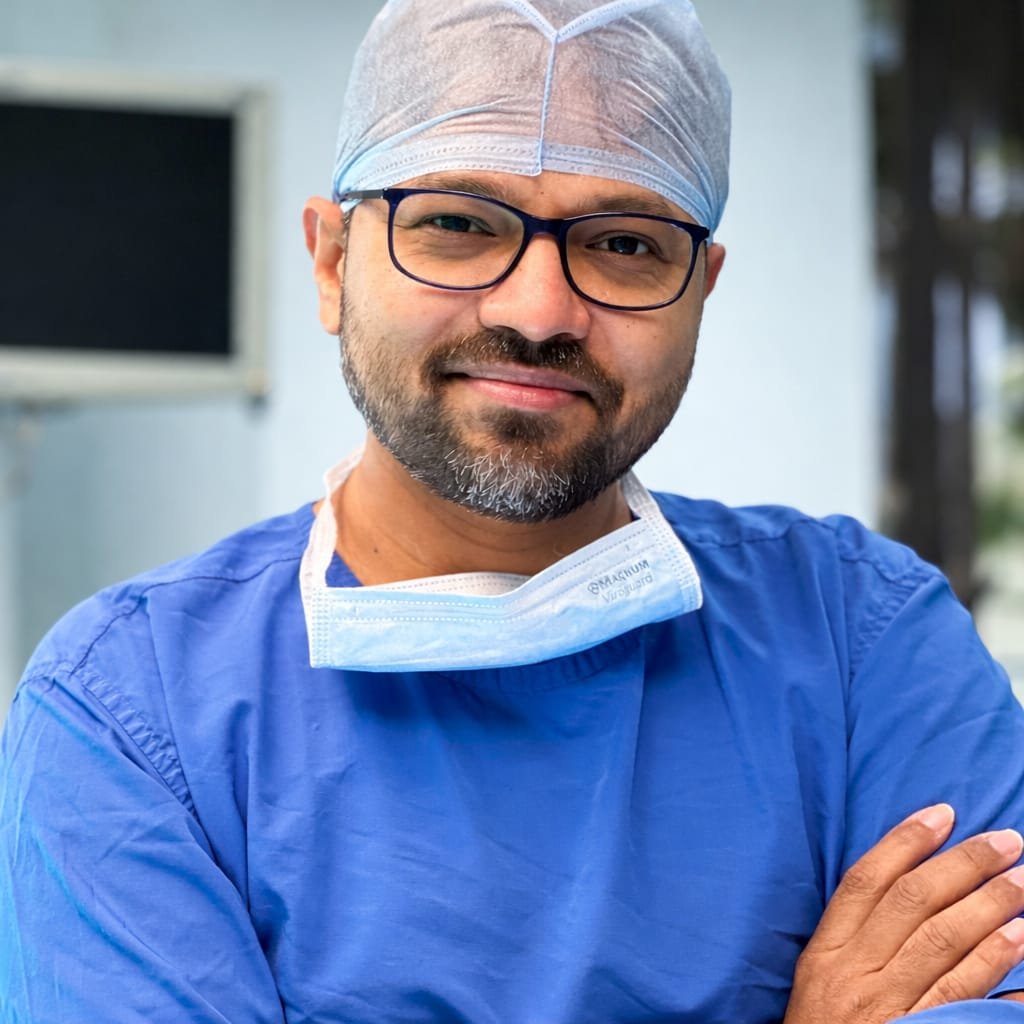
MBBS, MS (General Surgery), DNB Neurosurgery
MBBS, MS (General Surgery),
DNB Neurosurgery